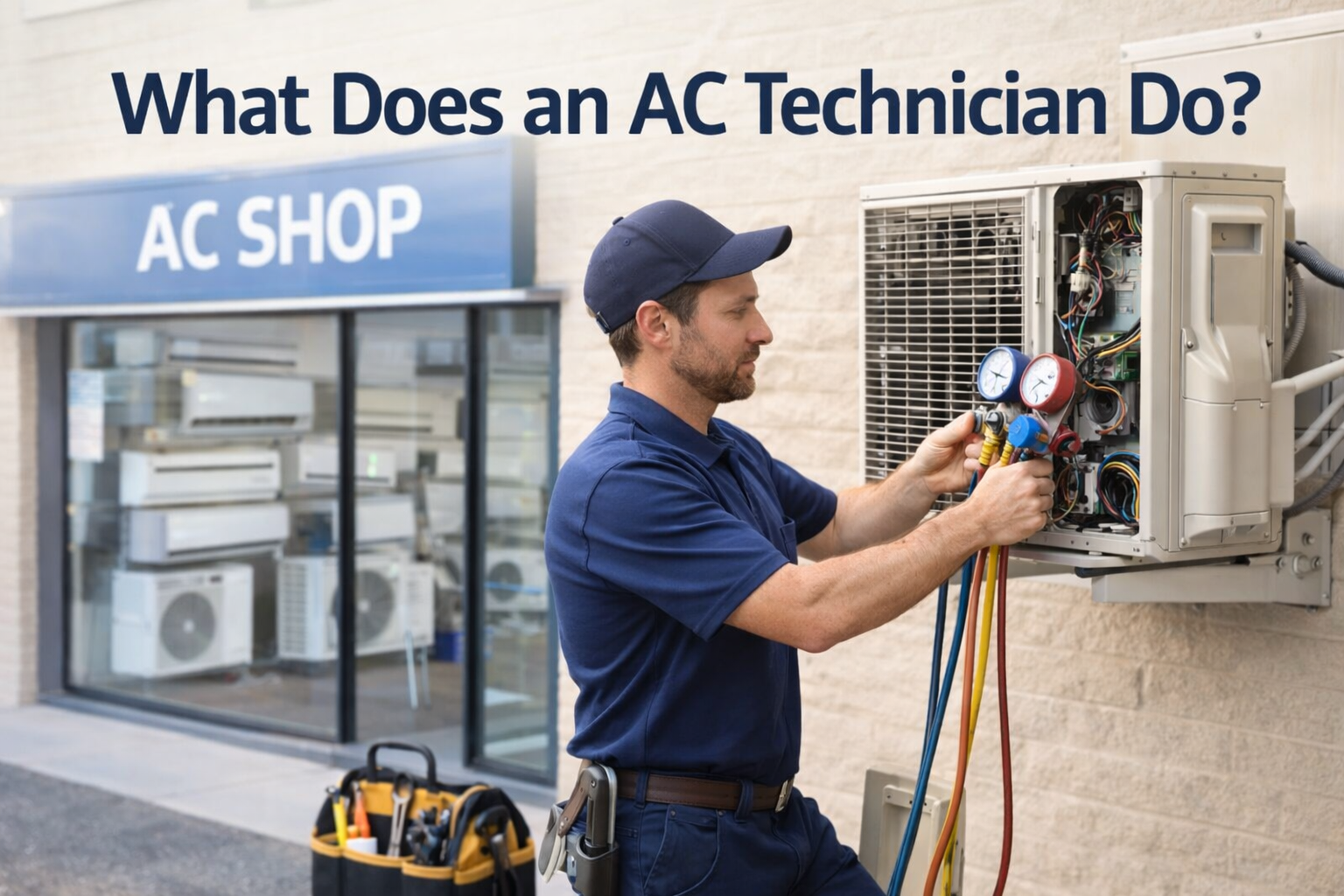
What Does an AC Technician Do? Duties, Skills & Importance
What Does an AC Technician Do?
Air conditioners play an important role in protection homes, offices, and commercial sitting room comfortably, particularly in hot weather. When an air conditioner works properly, maximum people do not think about the struggle behind it. Though, when cooling stops or problems look as if, an AC technician becomes essential. An AC technician is the professional blamable for fixing, keeping, servicing, and repairing air conditioning systems. This article clarifies in detail what an AC technician does and why their character is so important.
Who Is an AC Technician?
An AC technician is a trained individual who works with air conditioning and cooling systems. Their job is to ensure that AC units’ function efficiently, safely, and smoothly. They work on different types of air conditioners, including window ACs, split ACs, inverter ACs, and fundamental cooling systems.
AC technicians do more than just fix broken machines. They help avoid future problems, improve performance, and cover the life of cooling appliances through regular servicing and examinations.
Focal Responsibilities of an AC Technician
The daily work of an AC technician involves some important tasks. Each responsibility plays a role in keeping air conditioners consistent and energy-efficient.
Installation of Air Conditioners
One of the primary duties of an AC technician is installing new air conditioning systems. Proper installation is dangerous for performance and safety. For the duration of fixing your appliance, a technician checks the room size, selects the correct location, connects indoor and outdoor parts, connects electrical wiring, and confirms proper drainage.
A correctly connected AC cools better, uses less electricity, and takes longer.
Regular AC Servicing and Maintenance
AC technicians perform tiresome servicing to keep systems in good complaint. Complete time, dust and dirt collect inside the quantity, reducing cooling. Regular administration includes cleaning filters, washing coils, checking refrigerant levels, and exploratory electrical connections.
Repairing helps avoid sudden breakdowns, improves airflow, and maintains consistent cooling.
Diagnosing AC Problems
When an air conditioner stops cooling or starts making uncommon noises, an AC technician categorizes the cause of the problem. Problem decision requires technical knowledge and experience. Technicians check mechanisms, test electrical parts, and use tools to find problems.
Common problems contain weak cooling, gas leakage, compressor failure, fan issues, and regulator responsibility.
Repairing and Replacing Unreliable Parts
After finding the problem, the technician repairs or replaces damaged parts. This may involve setting motors, capacitors, compressors, fans, or control boards. Expert repair guarantees the system works safely and escapes further damage.
Irritating to repair these parts without proper knowledge can be dangerous and overpriced.
AC Gas Refilling and Leak Exposure
Refrigerant gas is important for cooling. If gas levels are low outstanding to leakage, the AC will not cool effectually. AC technicians check gas compression, detect leaks, repair them, and refill refrigerant according to creator values.
Correct gas running improves performance and defends the environment.
Checking Electrical Safety
Air conditioners depends on severely on electrical devices. AC technicians examine wiring, switches, and connections to prevent electrical pressures such as short circuits or fire risks. Safety checks are an important part of every service visit.
Guiding Customers on Proper Usage
AC technicians also instruct users on how to function and maintain their air conditioners properly. They provide information on infection settings, filter cleaning, service timetables, and energy-saving practices. This direction helps users reduce electricity bills and avoid senseless repairs.
Skills Essential to Be an AC Technician
To perform their job efficiently, AC technicians need a mix of practical knowledge and practical skills.
Technical Skills
- Thoughtful of cooling systems
- Information of electrical circuits
- Capability to use tools and testing equipment
- Reading instructions and system diagrams
Practical Services
- Problem-solving capability
- Attention to feature
- Physical strength
- Time management
Safety Alertness
Working with electricity and refrigerants requires severe safety measures. Technicians must follow safety principles to protect themselves and others.
Why the Part of an AC Technician Is Important?
AC technicians help keep comfortable living and working surroundings. Their work defenses that air conditioners function professionally, uses less electricity, and continue safe to use. Regular checking by skilled technicians reduces long-term costs and stops main failures.
Without professional AC technicians, cooling systems would fail more often and attitude safety risks.
Expert AC Technician vs DIY Repair
Many people challenge to fix AC topics themselves, but this can be risky. Air conditioners are compound systems, and indecorous handling can lead to more damage or personal injury. A specialized AC technician has the training, tools, and experience to handle problems securely and correctly.
Career Chances for AC Technicians
AC technicians can work in housing, commercial, and industrial surroundings. With experience, they can development to senior technician roles, managers, or start their own cooling service businesses. The demand for skilled technicians remains to grow due to growing use of air conditioning.
Frequently Asked Questions (FAQs)
What are the responsibilities of an AC technician?
Installing, maintaining, and repairing ventilation and air conditioning systems and tools. Identifying preservation risks on equipment. Detecting electrical and involuntary faults for HVAC systems. Cleaning, adjusting, and repairing systems, and execution warranty services.
What do air conditioning specialists do?
Technicians connect, maintain, and repair heating, cooling, and cooling systems. Heating, air conditioning, and cooling process and installers work on heating, aeriation, air conditioning, and refrigeration (HVACR) systems that control the infection and air fineness in buildings.
What is the normal age of technicians?
The average specialist's age is roughly 54 years old. These specialists will expect to give up work within the next ten years. There are smaller amount of specialists entering the HVAC field than there are reticent.
What trainings do I need for HVAC?
There are three qualifications available at this level:
· Diploma in Heating and Airing - Industrial and Commercial Installation (6188-30)
· Diploma in Heating and Ventilating - Ductwork Installation (6188-31)
· Diploma in Planned and Sensitive Maintenance on Heating and Expressing Systems (6188-32)
What is the 3-minute rule for AC?
If your system doesn't have that constructed-in protection, here's how you can put on the 3-minute rule yourself. Wait before restarting. If your AC shuts down suddenly or your casual the breaker, wait at least three minutes before turning it back on.
Conclusion
An AC technician plays a self-motivated role in keeping air conditioning systems functional, safe, and effective. From installation and conservation to repair and customer supervision, their responsibilities cover every feature of cooling systems. Regular overhauling by a professional AC technician not only progresses performance but also reduces energy expenses and increases the lifecycle of machines. Understanding what an AC technician does things to see the importance of professional care for air conditioners.